

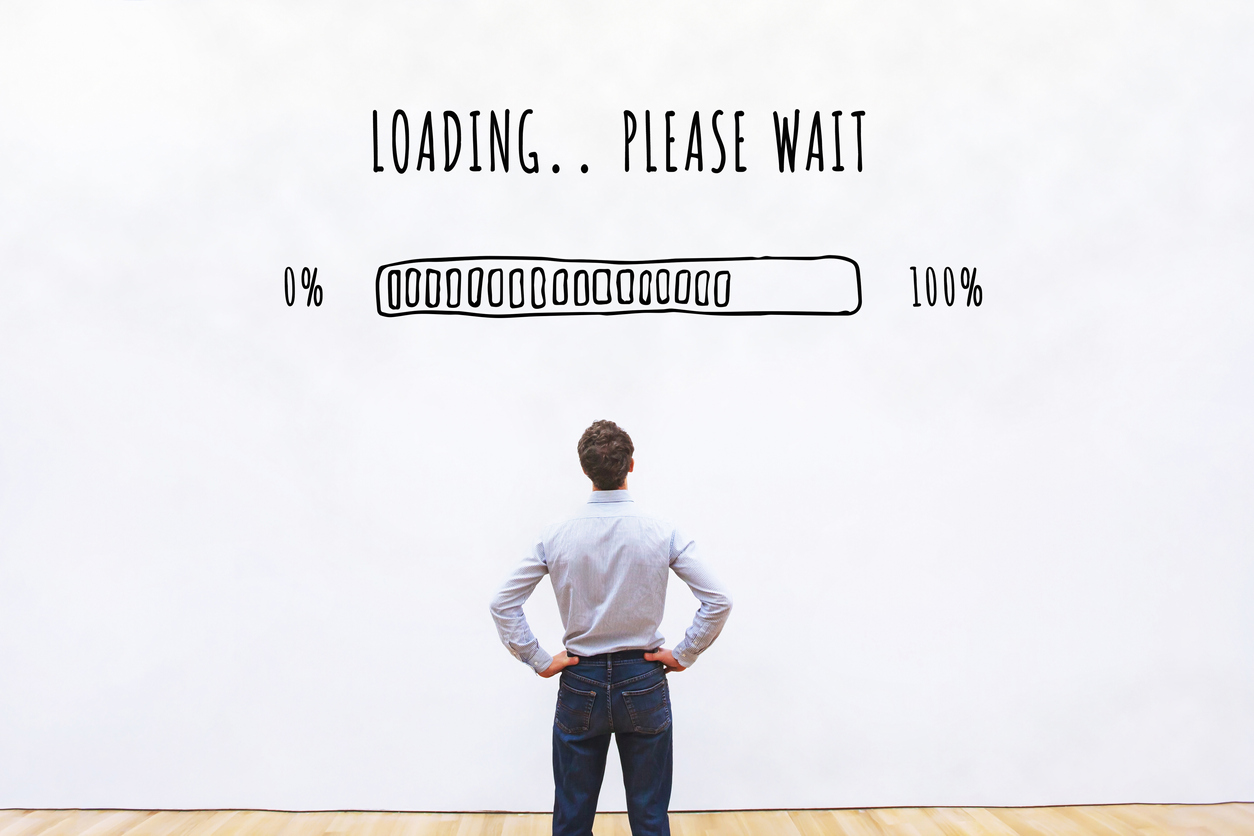
Our society has become accustomed to instant gratification. We no longer want to wait for things to arrive, we want them now. It’s why we go to fast food restaurants instead of cooking, and why we receive our packages the same day we order them. It is also why we want our websites to load at high speeds with every click.
The technical term for this is website performance, or the speed at which web pages are downloaded and displayed in a user’s web browser. This is key to optimizing your website, and allows for a better overall user experience.
When your site feels more reliable and professional, people will be less likely to bounce off of it and go to another site. If your website has a high bounce rate, it negatively affects where you rank on search engines and how your website is shared to social media platforms like Facebook. This is because search engines like Google and platforms like Facebook want their users to have the best experience possible on pages they share. So, If your website takes too long to load, these platforms may choose to not display your website, meaning you’re missing out on views, interactions, and website traffic. As a general rule of thumb you want your website to become interactive within 5.3 seconds, but the faster the better.
Here are some ways you can optimize your website performance when designing your website.
- Store videos on an existing hosting server: Existing hosting servers like YouTube or Vimeo allow you to embed/link videos into your site instead of uploading them, which would cause your page to load slower. By using this method all of the storage takes place on the existing hosting server instead of on your website.
- Compress your images: One way to increase your website loading speed is by compressing large images into smaller ones. This doesn’t decrease the visibility of the image on your website, but instead you are changing the way the image code is read by the computer.
- Use minification in your website’s code: An easier way to think of minification is to think of your website like a small room. In order to optimize space and efficiency you want to remove the unnecessary things, and condense what you have. For a website this can include unnecessary things in the code like comments, white space, and line breaks. When you do this, it is not a permanent change, and a copy of your original source code will be left in your website editing system, so you can always go back and undo any changes. This process allows your web browser to read the files on your page faster and therefore load them faster as well.
A slow website equals less traffic. This means that you could be losing new visitors and repeat customers at the same time. By optimizing your website performance you’ll improve your pages views, interactions, and traffic. To learn more about website optimization for your business, follow along with our monthly blog, and for more personalized expert advice call (210) 348-8008.